
Overhead Crane
Overhead crane (bridge crane) models, 1–40 tonne capacity and the factors that set the price. Single and double girder cranes built to order in Bursa, Türkiye.
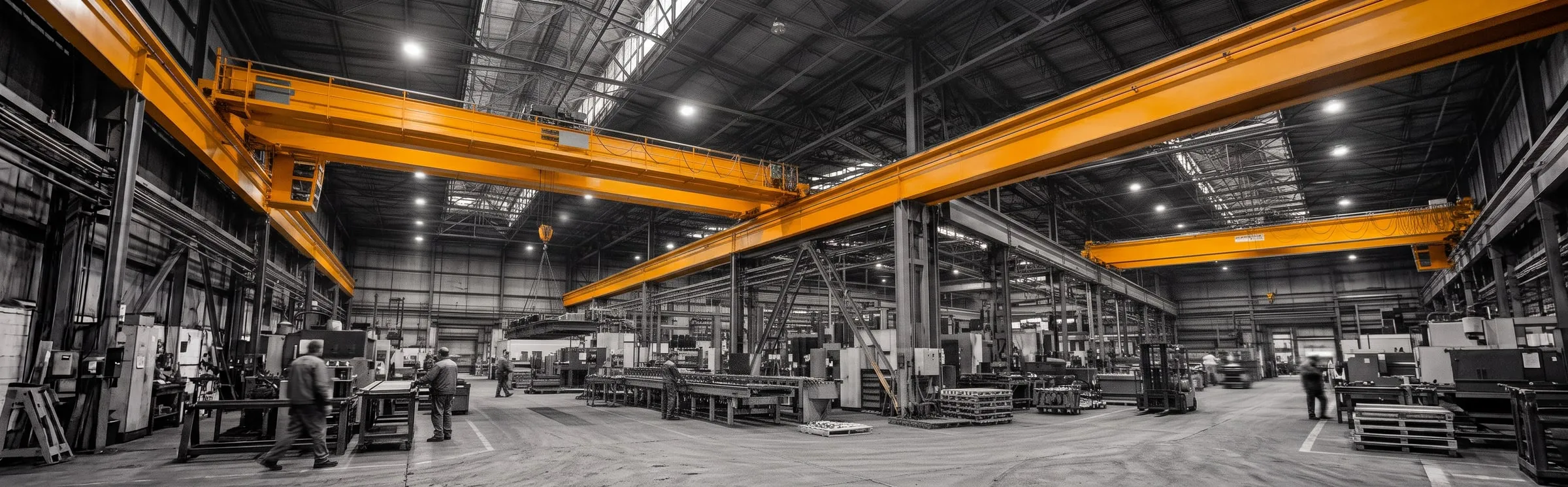
An overhead crane is a bridge that travels on two runways high up in a factory or warehouse, with a hoist travelling across the bridge. The hook can reach any point in the building while the floor stays clear.
Beta Crane designs and builds overhead cranes in its factory in Bursa to the dimensions of your building, and carries out the survey, installation, commissioning and maintenance.
Types
Pick the type that fits your building.
Capacity and span values are the standard ranges on the product pages; they are adapted to each project.
Single Girder Overhead Crane
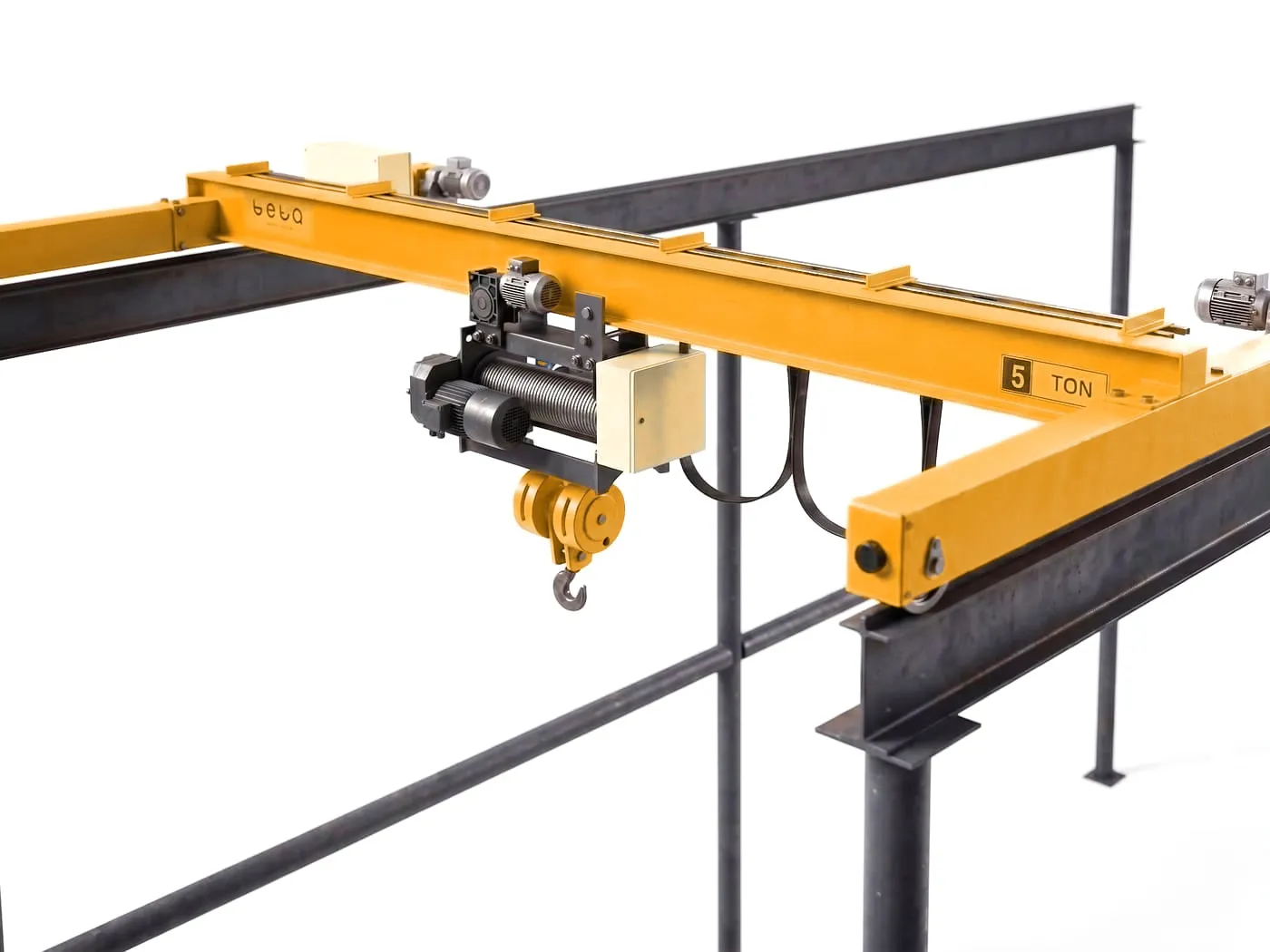
The most common overhead crane. The hoist runs on the lower flange of a single girder: a light structure, an economical runway and quick installation.
- Capacity
- 1 – 16 t
- Span
- 3 – 20 m
Double Girder Overhead Crane
For heavy loads, wide spans and intensive use. The trolley runs on top of two girders, so the hook rises higher.
- Capacity
- 5 – 40 t
- Span
- 6 – 40 m
Monorail Crane
Moves loads back and forth along a single line: production lines, loading bays and work over benches.
- Capacity
- 500 kg – 16 t
Gantry Crane
Runs on legs at ground level. Used outdoors or where the building cannot carry a runway.
- Capacity
- 1 – 40 t (project specific)
- Span
- Project specific
Jib Crane (Slewing Jib Crane)
A slewing arm on a column or wall, for local lifting at a bench or machine.
- Capacity
- 250 kg – 5 t (project specific)
Price
What sets the price of an overhead crane?
Every overhead crane is calculated for its building, so we do not publish list prices. These factors set the quotation:
- 01
Capacity (tonnage)
The heaviest load to lift. The hook, rope or chain, motors and girder section are chosen from it.
- 02
Bridge span
The distance between the two runways. A longer span needs a heavier girder, and beyond a point a double girder.
- 03
Lifting height
The distance between the lowest and highest hook positions. It sets the rope or chain length and drum size.
- 04
Single or double girder
A single girder is lighter and cheaper; a double girder is chosen for heavy loads, wide spans and a higher hook.
- 05
Intensity of use
How many hours a day and how often loads are lifted. It changes the FEM / ISO duty class and motor choice.
- 06
Speeds and controls
Inverter soft start, two-speed motors, pendant control or radio remote control.
- 07
Runway and building
Does the building already have a runway and columns? If not, runway fabrication and installation are added.
- 08
Site location
Transport distance, installation conditions and commissioning time.
Why Beta Crane
One partner from build to service.
- Designed and built in our factory in Bursa, sized to the dimensions of your hall
- Calculated to FEM / ISO standards; a CE certified product range
- Free site survey: we take the measurements on site together
- Runway fabrication and laser rail alignment from the same team
- Installation, commissioning, periodic maintenance and spare parts
Runway fabrication · Maintenance and inspection · Modernising old cranes
Process
From enquiry to commissioning.
- 01
Enquiry
Send capacity, span and lifting height by the form, phone or WhatsApp.
- 02
Site survey
We inspect the hall and measure the runway and columns.
- 03
Quotation
A written quotation with girder type, hoist and controls.
- 04
Fabrication
Girders, end carriages and the control panel are built in our factory.
- 05
Installation
Installation on site, load test and commissioning.
- 06
Service
Periodic maintenance, breakdown service and spare parts.
FAQ
Questions about overhead cranes.
How much does an overhead crane cost?
Each overhead crane is calculated for its building; the price depends on capacity, span, lifting height, single or double girder, the controls and whether a runway already exists. Send us these details and we will prepare a written quotation.
Are an overhead crane, bridge crane and travelling crane the same thing?
Yes. They all describe a bridge that travels on two runways along the building, with a hoist travelling on the bridge.
Should I choose a single or a double girder?
A single girder crane is more economical for 1 – 16 t and moderate spans. A double girder crane suits 5 – 40 t, wide spans, a higher hook and intensive use. Our comparison page explains both in detail.
Does a second-hand overhead crane make sense?
A used crane rarely matches the span and lifting height of your building exactly, and its girder, motors and brakes must be inspected. If you already own an old crane, we can modernise it (inverter, new controls, brakes and safety devices).
How do operators get certified?
Operator certificates are issued by authorised training providers; Beta Crane does not issue them. A user manual is supplied with the crane and usage is explained at commissioning. Cranes also need periodic inspections.
My building has no runway. Can an overhead crane be installed?
Yes. If the columns can carry it, we fabricate the runway beams and install them with laser alignment. If the building cannot carry a runway, a gantry crane or a free-standing system is proposed.
Is there an overhead crane for low headroom buildings?
Yes. To keep hook height in low buildings, a double girder crane or a low-headroom hoist can be chosen. State the building height and runway level in your enquiry.
Get a Quote
Overhead crane
Fill in the details below; we will prepare a quotation for this product tailored to you.
What helps us most for the quotation:
- Capacity
- Span (between rail centres)
- Bay (runway) length
- Lifting height
- Is there a crane runway?
- Columns or corbels in the bay?
- Control type
- Intensity of use
- Site location (city / district)