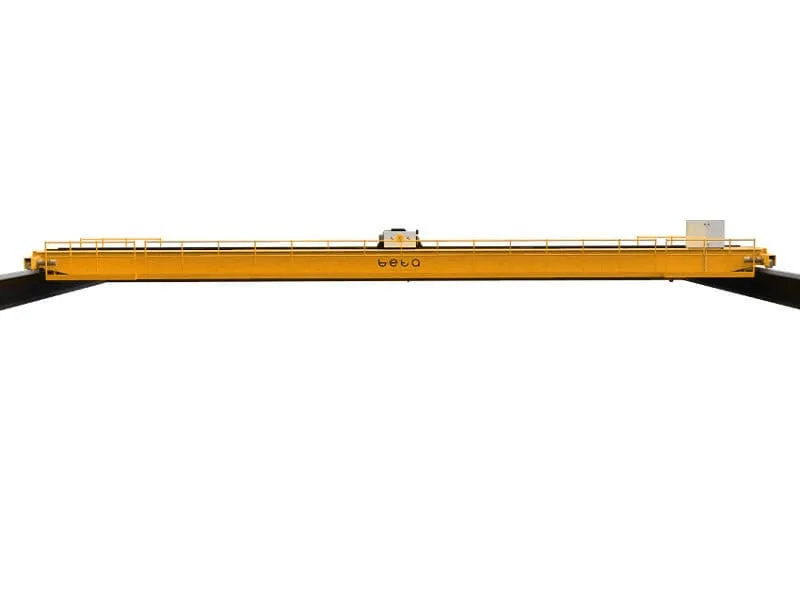
What is a double girder overhead crane?
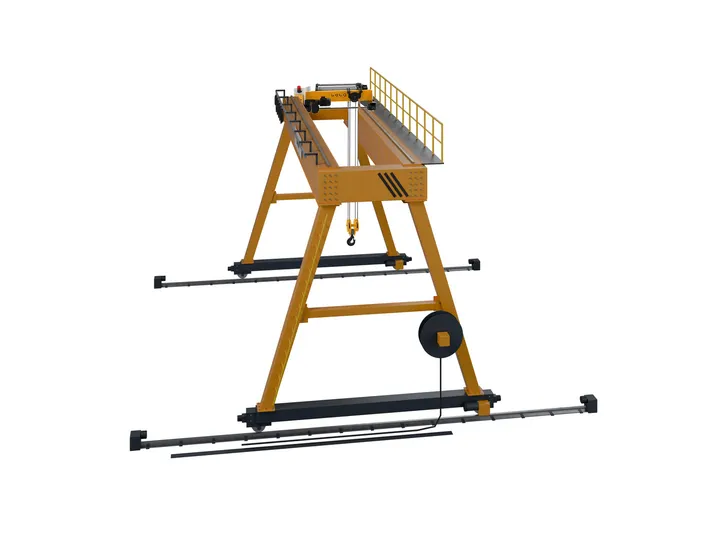
A double girder overhead crane is a crane with a lifting trolley (crane trolley hoist) running on top of two main girders. Because the hook rises between the girders, it lifts higher under the same roof. It is built to order from 5 to 40 tons for high strength, stability and long service life in heavy industry.
Why a double girder overhead crane?
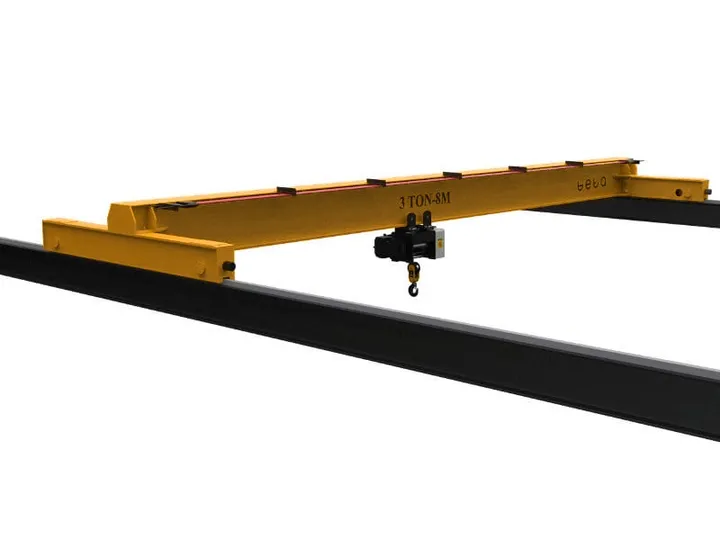
Compared with single girder systems:
- High load capacity: suited to heavy loads.
- Stable operation on wide spans: works over wider spans.
- Greater lifting height: the hook rises between the girders.
- Designed for heavy duty classes and long service life.
- Walkway: a maintenance walkway and handrail can be added on the girders.
Areas of use
- Heavy industry plants
- Steel and metal production factories
- Power plants
- Machine manufacturing plants
- Port and terminal applications
- Large warehouses and logistics centres
Double girder crane components
- Two box girders: with the rails the trolley runs on.
- End carriages: at both ends of the bridge, travelling on the runway with their wheels and drive motors.
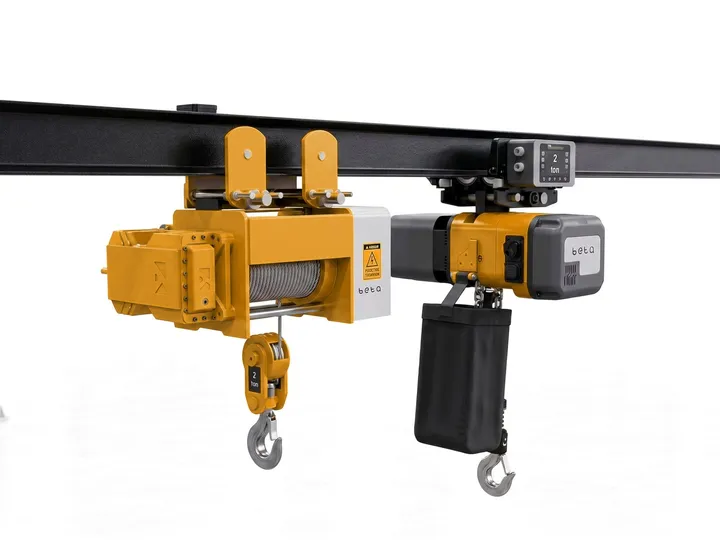
- Crane trolley hoist: lifting trolley with drum, gearbox, motor and hook block.
- Runway: girder and rail resting on columns or corbels.
- Power and controls: busbar or cable power supply, control panel, pendant or remote control.
- Safety: limit switches, overload protection and emergency stop.
Options
- Inverter / PLC speed control and automation
- Auxiliary hook (second hoist trolley)
- Walkway and handrail on the girders
- Radio remote control or operator cabin
- Equipment suited to ambient conditions
Double girder crane prices
Double girder crane prices depend on:
- Capacity
- Bridge span
- Lifting height
- Duty class
- Level of automation
- Ambient conditions
You can request a free site survey and technical analysis for a firm price.
When choosing
- Capacity: add the weight of the hook, slings and attachments to the heaviest load; mention any expected capacity increase.
- Bridge span: the distance between the centres of the two runway rails (standard 6 – 40 m).
- Lifting height: the highest point the hook must reach and the clear height of the bay.
- Auxiliary hook: is a second lifting point needed next to the main hook?
- Intensity of use: continuous operation through the shift sets the duty class and components.
Engineering process
- Site survey and needs analysis
- Structural calculations and engineering design
- Manufacturing
- Installation
- Testing and commissioning
Why Beta Crane?
- CE certified manufacturing
- Structural and engineering calculations, project-specific design
- On-site survey and technical consultancy
- Service support across Türkiye
- Long-lasting construction
Frequently asked questions
How many tons does a double girder overhead crane lift?
Standard systems are built from 5 to 40 tons. Higher capacities can be engineered for the project.
How does it differ from a single girder crane?
Double girder systems are designed for heavier loads and wider spans; they are stronger and more stable, and lift higher under the same roof.
What is the maintenance interval?
Maintenance is recommended every 3–6 months depending on use. In addition, lifting equipment must legally be inspected at least once a year.
What information is needed for a quotation?
Capacity, bridge span, bay length, lifting height, need for an auxiliary hook, whether there is a runway, intensity of use and site location.