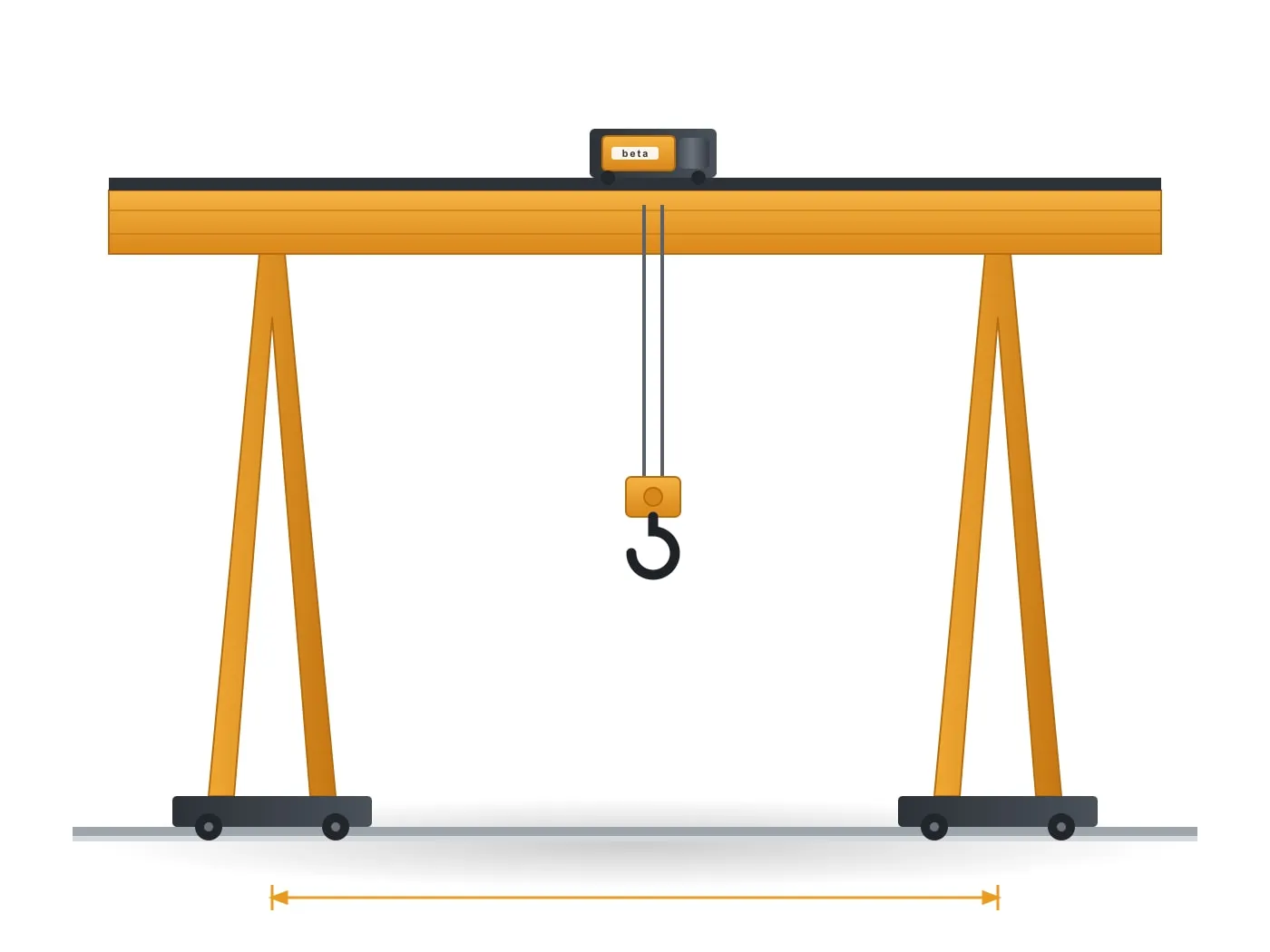
What is a gantry crane?
A gantry crane is a crane whose bridge rests on its own legs rather than on columns or the building structure, and travels on rails laid on the floor. The electric wire rope or chain hoist on the girder carries the load to any point within the area between the legs. It is the best solution for bays where no runway can be built, outdoor stock yards, precast and concrete plants, steel and marble stock areas and loading yards.
Unlike an overhead crane, it needs no supporting structure: no columns, corbels or runway girders are required; the legs and floor rails take over this role.
Gantry crane types
- Full gantry crane: has legs at both ends of the girder; both legs travel on floor rails. Used in outdoor yards and stock areas outside buildings.
- Semi-gantry crane: one end of the girder rests on a leg running on a floor rail, the other on a runway mounted on the building columns. It works along one side of a bay or between a building and an outdoor yard.
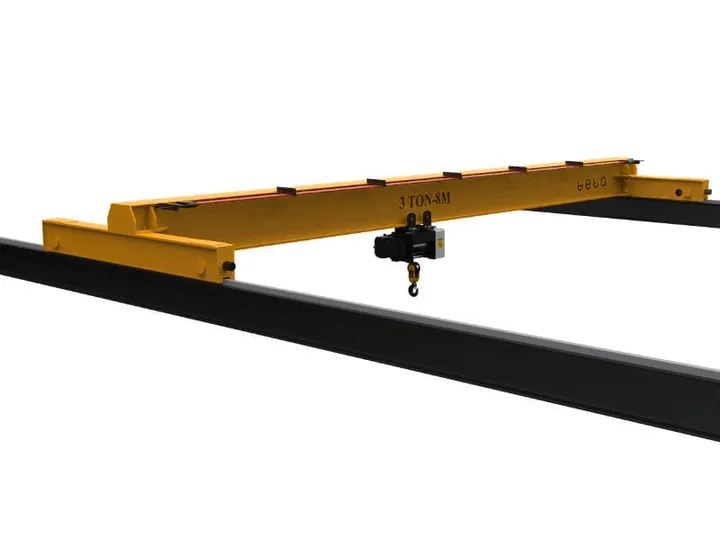
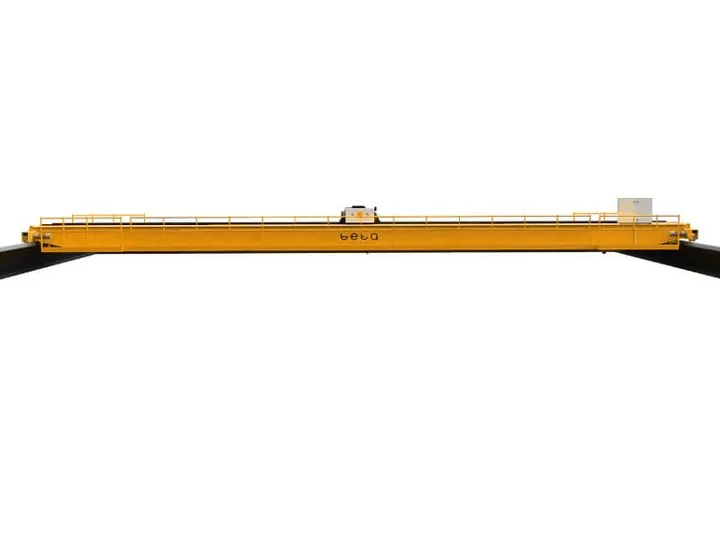
- Single or double girder: single girder suits light and medium loads; double girder suits heavy loads, wide spans and high lifting heights.
When choosing
- Capacity: add the weight of the hook, slings and attachments to the heaviest load.
- Span: the distance between the centres of the two floor rails.
- Lifting height: the highest point the hook must reach; the leg height is set accordingly.
- Travel distance: the total length of the floor rails.
- Environment: outdoors, wind load, protection against rain and dust, and a storm lock are taken into account.
Why a Beta Crane gantry crane?
- The girder, legs and travel gear are calculated for the project and manufactured in Bursa.
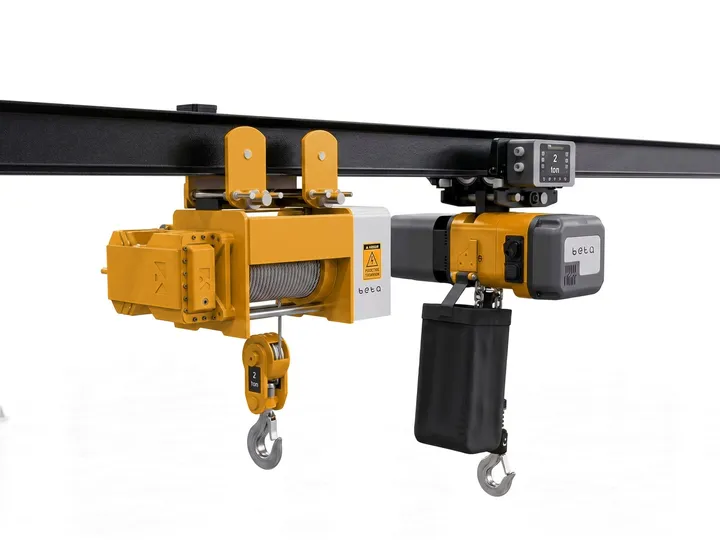
- Our own electric wire rope and chain hoists are used as the lifting unit, so spare parts and service come from one source.
- Floor rails, installation, load testing and commissioning are carried out by our team.
Frequently asked questions
What is the difference between a gantry crane and an overhead crane?
An overhead crane travels on a runway resting on the building columns. A gantry crane travels on its own legs on rails laid on the floor, so it is used where no runway can be built and in outdoor yards.
Can a gantry crane be used outdoors?
Yes. For outdoor use, wind load is taken into account, the electrical equipment is chosen with a suitable protection class and the crane can be locked against storms.
When is a semi-gantry crane preferred?
When one side of the bay has columns that can carry a runway and the other side cannot. One end of the girder rests on a leg on the floor, the other on the runway on the columns.
What information is needed for a quotation?
Capacity, span, lifting height, travel distance, full or semi-gantry preference, working environment and site location. A few photos of the site also help a lot.