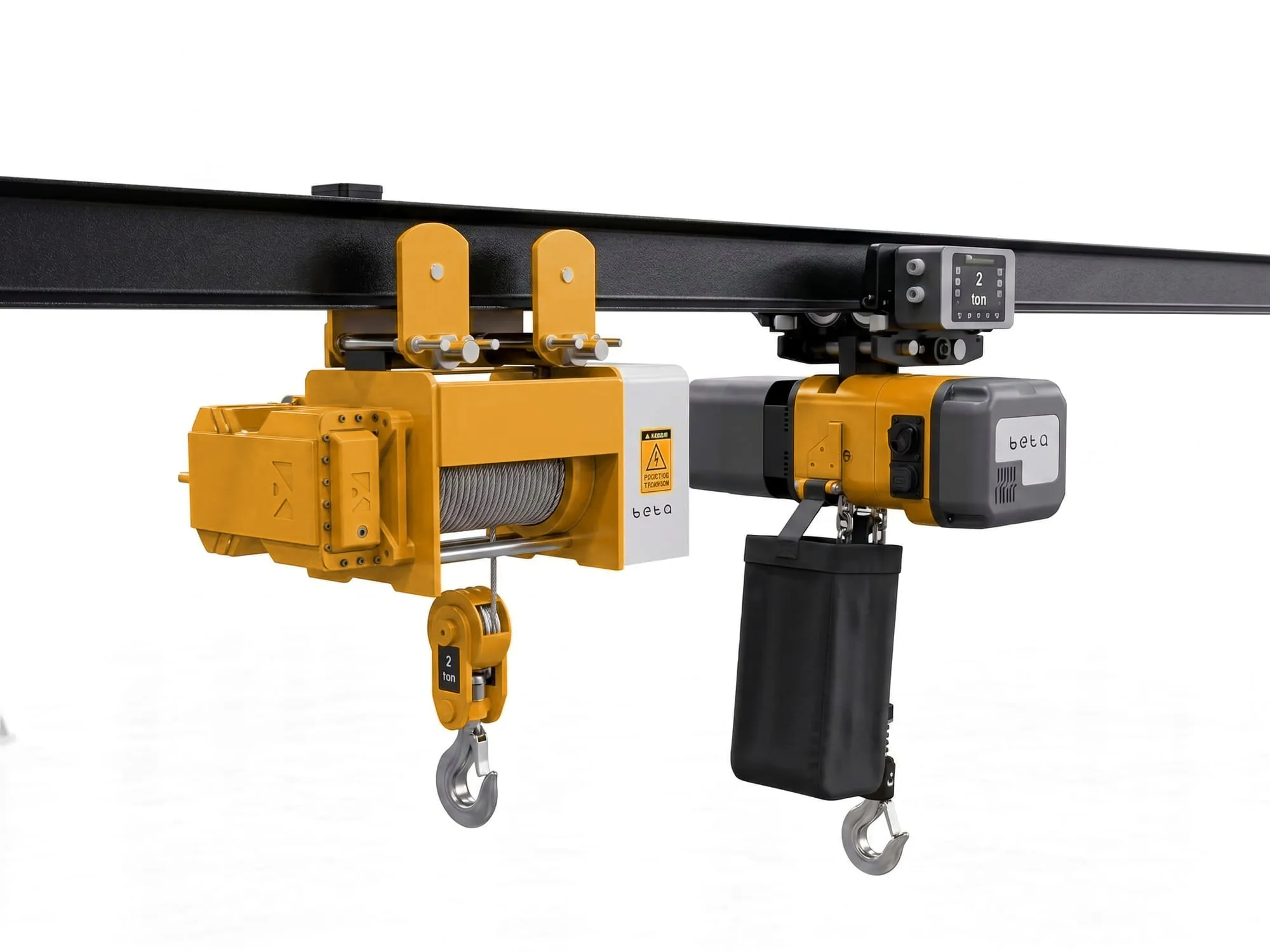
What is a monorail crane?
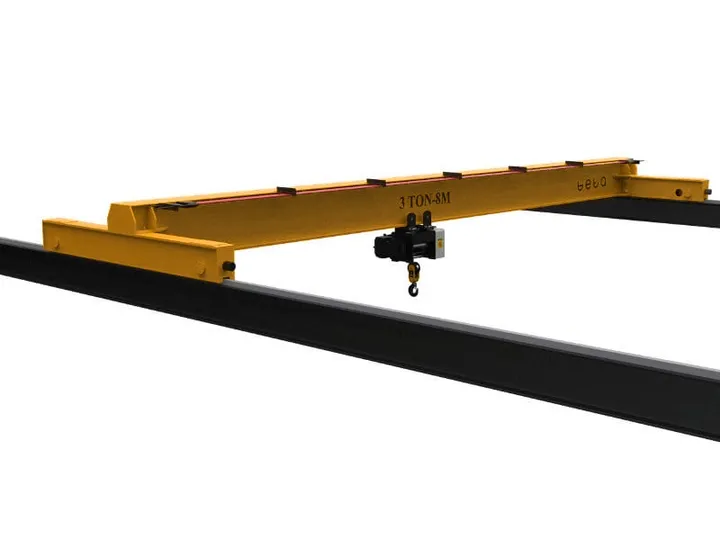
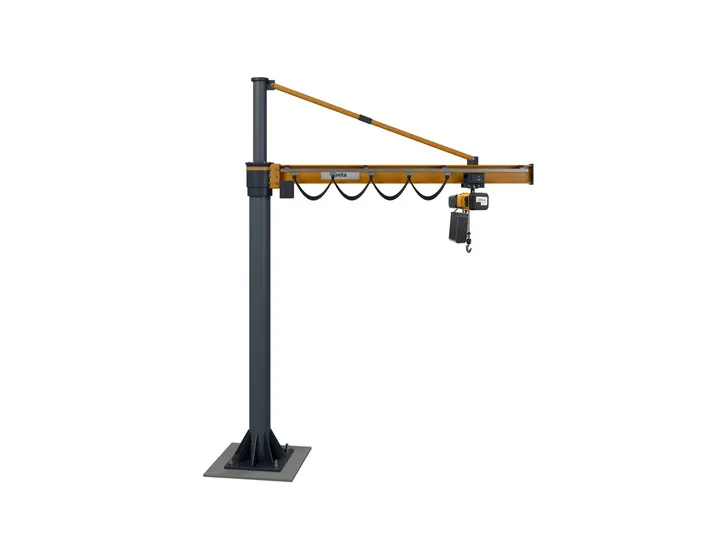
A monorail crane is a lifting system that runs on a single I-beam or NPI rail and carries loads both vertically and horizontally. It can be used as a stand-alone line in factories, and it is also integrated into overhead crane bridge systems as the lifting trolley (hoist). Beta Crane builds high-performance, long-lasting monorail crane solutions designed for your building.
Why a monorail crane?
- Takes little space: hung directly from the existing roof structure or from dedicated steel columns, with no floor space used.
- The most economical solution for a fixed line: if the load always moves on the same route (bench to bench, line end to loading), it needs far less investment than an overhead crane.
- Straight or curved line: works on lines curved to suit the building, or with turntables.
- Quick installation: short engineering and installation time.
Using monorails on overhead crane lines
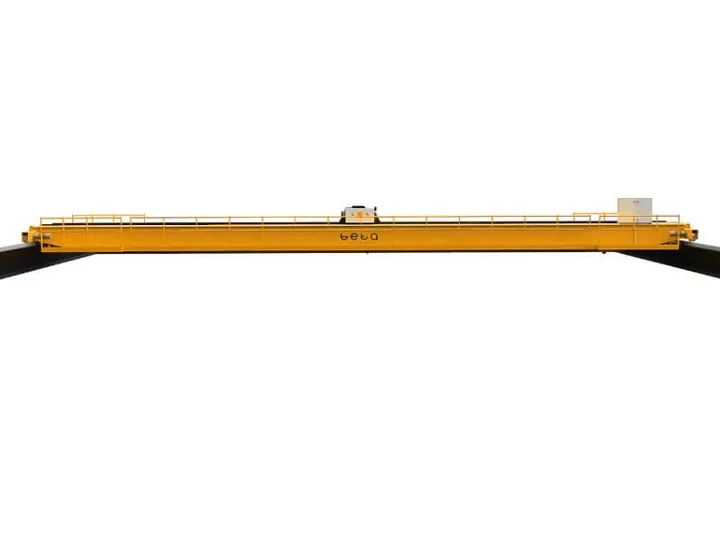
Monorail systems are ideal for narrow areas that need straight or curved load transfer along one line. Unlike an overhead crane, which moves across a wide area, a monorail carries the load along a single line. The same monorail hoist unit is also used as the trolley running under the bridge of a single girder overhead crane.
Monorail crane components
- Rail line: I-beam or NPI girder, straight or curved.
- Hangers: suspension and connections to the roof structure or steel brackets.
- Travel trolley: runs on the lower flange; special trolleys for curved lines, matched to the curve radius.
- Electric hoist: electric chain or wire rope hoist.
- Controls: pendant control or radio remote control.
Options
- Inverter-controlled or dual-speed travel
- Curved line and turntable
- Radio remote control
- Overload limiter and limit switches
Monorail and overhead crane prices 2026
Monorail crane prices depend on capacity, lifting height, duty class, line length and whether the line is straight or curved. To find the best overhead crane and monorail solution for your plant, get a current 2026 quotation and use our free site survey, contact our engineering team.
When choosing
- Capacity: add the weight of the hook, slings and attachments to the heaviest load.
- Line length and shape: straight or curved; the curve radius sets the trolley.
- Lifting height: the highest point the hook must reach.
- Supporting structure: the existing beam or roof structure is checked for load; new beams and hangers are added if needed.
- Speed and controls: consider inverter travel and a remote control for precise positioning.
Why Beta monorail crane systems?
- Built to the same quality standard as our double girder overhead cranes.
- High safety: electromagnetic disc brake, overload limiter and limit switches.
- Precise travel: inverter drives give soft starts and stops, minimising load sway.
- Built for heavy duty: helical gearboxes to FEM / ISO standards and a modular body.
Frequently asked questions
What is the main difference between a monorail crane and an overhead crane?
A monorail crane moves only back and forth and up and down along a single rail line. An overhead crane carries loads across the whole bay with its bridge.
Can a monorail crane be used as an overhead crane hoist?
Yes. Monorail hoist units work as the main lifting trolley hung under the bridge of single girder overhead cranes. They can also work as a ceiling crane on a single I-beam fixed to the roof structure.
Can monorail cranes be used on curved lines?
Yes. Besides straight lines, monorail cranes with special trolleys matched to the curve radius are used on lines curved to suit the building or with turntables.
What information is needed for a monorail crane quotation?
Capacity, line length, whether the line is straight or curved, lifting height, whether there is an existing supporting beam, and the site location.