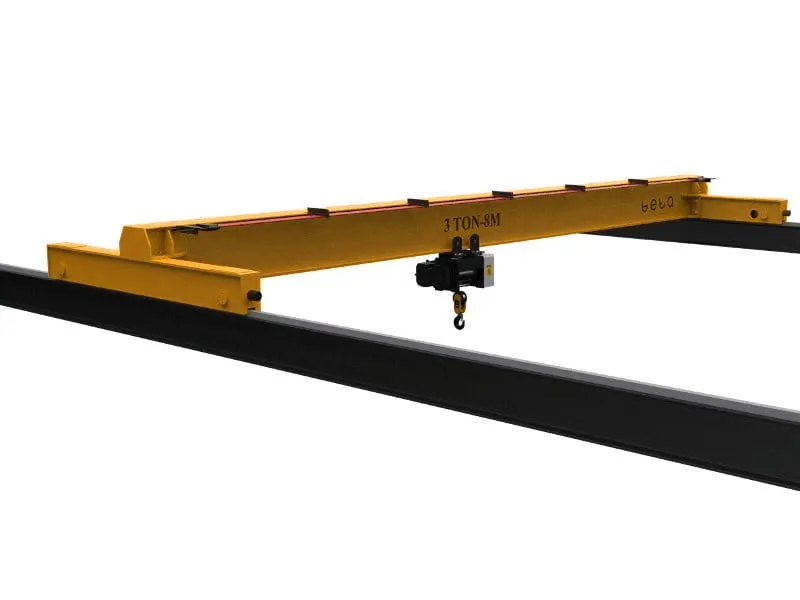
Single Girder Overhead Crane
Crane SystemsSKU BETA-TGKV1

Single Girder Overhead Crane

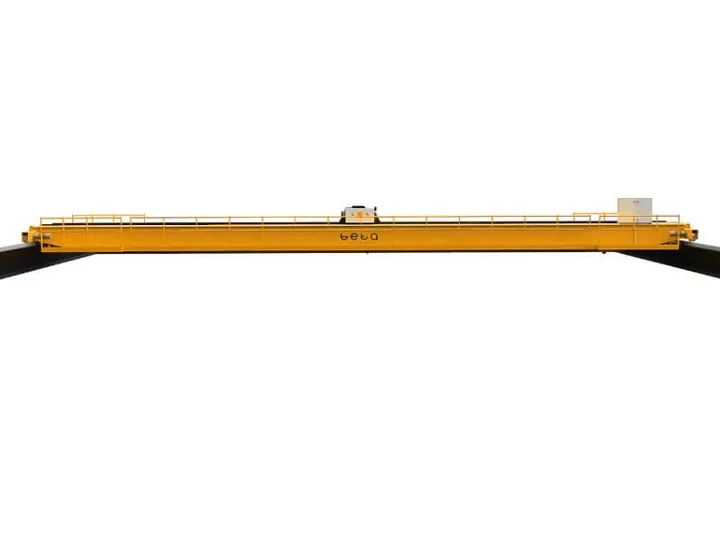
Single girder overhead cranes from 1 to 16 tons, built to order. Pricing by project, fast delivery and free technical consultancy.

  • Capacity1 – 16 t
  • Lifting Height1 – 20 m (and above)
  • Duty ClassFEM / ISO standards
  • Power Supply380 V – 50 Hz
  • Made in Türkiye
  • CE and TSE standards
  • Technical service
  • Spare part support

Data sheet

Technical specifications

Standard values; capacity, span and lifting height are adapted to your project.

Single Girder Overhead Crane · BETA-TGKV1
Origin
Türkiye
Capacity
1 – 16 t
Lifting Height
1 – 20 m (and above)
Bridge Span
3 – 20 m
Duty Class
FEM / ISO standards
Speed Control
Inverter controlled
Power Supply
380 V – 50 Hz
Safety
Limit switch, overload protection

Beta Crane · +90 224 323 00 17 · destek@betavinc.com

Technical drawing

General features and components

The main parts of the crane in plan and front view, and the dimensions used in a quotation.

PLAN VIEWSAFRONT VIEWHCDETOP OF RAIL12345678
Schematic drawing. Dimensions S, A, H, C, D and E are provided with the quotation according to capacity, span and your building.

Components

  1. 1
    Main girder

    The single girder that carries the load: a rolled section for short spans, a welded box girder for long ones.

  2. 2
    End carriages

    Wheeled assemblies that carry the bridge along the runway. The girder is bolted to them.

  3. 3
    Hoist unit (monorail hoist)

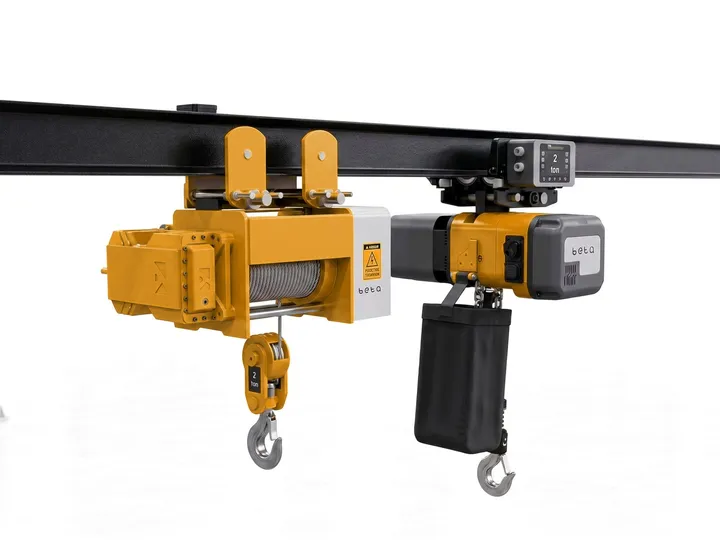
    A wire rope or chain hoist that runs on the bottom flange of the girder, with its lifting and travel motors.

  4. 4
    Bridge travel drive

    A geared motor on each end carriage. An inverter gives smooth starts and stops.

  5. 5
    Runway

    The beam and rail on columns or corbels. The bridge travels along it.

  6. 6
    Power feed

    A festoon cable line that feeds power and control signals to the hoist unit.

  7. 7
    Hook block

    Sheave block with a DIN hook. At its highest position the hook stays below the girder.

  8. 8
    Control panel and controls

    Contactor and inverter panel. The crane is operated by pendant or radio remote.

General features

  • The hoist unit runs on the bottom flange of the girder; the crane is light, so building and runway loads stay low.
  • A single girder and a standard hoist unit make it quick to build and install, at a lower investment.
  • It has a low build height and fits workshops with low ceilings.
  • Because the hook stays below the girder, the lifting height under the same roof is lower than with a double girder crane.
  • Preferred for light and medium duty classes in workshops and production lines.

Dimension letters

S
SpanDistance between the centre lines of the two runway rails.
A
WheelbaseDistance between the two wheels of an end carriage; it sets the stability of the bridge on the rail.
H
Lifting heightUsable distance from the highest hook position down to the floor.
C
Hook approach (top)Difference between top of rail and the highest hook position.
D
Crane build heightFrom top of rail to the highest point of the crane; it gives the clearance needed under the roof.
E
Hook approach (side)The closest the hook can get to the rail centre line; it sets the dead zone along the wall.

From order to installation

How an overhead crane comes to life

The seven steps a crane goes through, from first contact to handover.

  1. 01

    Enquiry and site survey

    Capacity, span, lifting height and duty are discussed; the bay is measured on site and the runway and columns are checked.

  2. 02

    Quotation and order

    A technical specification and quotation are prepared from the measurements. On approval the order is confirmed and delivery is planned.

  3. 03

    Engineering

    Girder section, wheel loads and duty class are calculated; fabrication drawings and the electrical design are produced.

  4. 04

    Fabrication

    Plates are cut, the box girder and end carriages are welded; wheel groups, trolley and hoist unit are prepared.

  5. 05

    Painting and factory test

    Surfaces are prepared and painted. Panel, motors and drives are wired; motions and safety equipment are tested at the factory.

  6. 06

    Dispatch

    Bridge, end carriages and trolley are split into transportable parts, secured and sent to site.

  7. 07

    Installation and commissioning

    The bridge is set on the runway, power supply and controls are connected. A load test is carried out, operators are trained and the crane is handed over.

Description

Applications and features

What is a single girder overhead crane?

A single girder overhead crane is a crane with a lifting trolley (hoist) running on one main girder. The bridge travels on a runway resting on the building columns or corbels, and the hoist runs on the lower flange of the girder, so loads can reach every point of the bay. It is built to order from 1 to 16 tons for light and medium loads.

Why a single girder overhead crane?

Compared with double girder systems:

  • Lower investment cost: more economical.
  • Lighter steel structure and lower column loads: the building and runway can be lighter.
  • Quick installation: shorter installation time.
  • Low maintenance cost and energy efficiency.

Areas of use

  • Production plants
  • Machine manufacturing workshops
  • Steel construction factories
  • Warehouses and logistics areas
  • Energy and heavy industry plants

Single girder crane components

  1. Bridge girder: a single box or I-beam main girder.
  2. End carriages: at both ends of the bridge, travelling on the runway with their wheels and drive motors.
  3. Hoist trolley: electric wire rope or chain hoist running on the lower flange.
  4. Runway: girder and rail resting on columns or corbels.
  5. Power and controls: busbar or cable power supply, control panel, pendant or remote control.
  6. Safety: limit switches, overload protection and emergency stop.

Options

  • Inverter speed control
  • Radio remote control
  • Runway and columns included in the project
  • Equipment suited to dust, heat or outdoor conditions

Single girder crane prices

Single girder crane prices depend on:

  1. Capacity
  2. Bridge span
  3. Lifting height
  4. Duty class
  5. Ambient conditions (dust, temperature, etc.)
  6. Whether a runway is also needed

You can request a free site survey and quotation for a firm price.

When choosing

  1. Capacity: add the weight of the hook, slings and attachments to the heaviest load.
  2. Bridge span: the distance between the centres of the two runway rails (standard 3 – 20 m).
  3. Lifting height: the highest point the hook must reach and the clear height of the bay.
  4. Supporting structure: are there columns or corbels? If not, the runway and columns are added to the project.
  5. Intensity of use: daily operating time and number of lifts set the duty class.

If heavy loads, wide spans and high lifting heights are needed, a double girder overhead crane is the better choice.

Engineering process

  1. Site survey
  2. Structural and engineering calculations
  3. Manufacturing
  4. Installation
  5. Testing and commissioning

Why Beta Crane?

  • CE certified manufacturing
  • Project-specific engineering calculations, structural analysis and load safety
  • On-site survey and technical consultancy
  • Service network across Türkiye

Frequently asked questions

How many tons does a single girder overhead crane lift?

Standard systems are built from 1 to 16 tons. Custom designs are possible for the project.

How does it differ from a double girder system?

The single girder system is more economical and preferred for lighter loads. For heavy loads and wide spans, a double girder system is recommended.

What is the maintenance interval?

Maintenance is recommended about every 6 months, more often under heavy use. In addition, lifting equipment must legally be inspected at least once a year.

What information is needed for a quotation?

Capacity, bridge span, bay length, lifting height, whether there is a runway, intensity of use and site location.
Get a Quote

Single Girder Overhead Crane

Fill in the details below; we will prepare a quotation for this product tailored to you.

What helps us most for the quotation:

  • Capacity
  • Span (between rail centres)
  • Bay (runway) length
  • Lifting height
  • Is there a crane runway?
  • Columns or corbels in the bay?
  • Control type
  • Intensity of use
  • Site location (city / district)

When you press send, your details open in WhatsApp as a ready-made message; just press send there.

By sending the form you agree that your details are processed to prepare a quotation. Privacy notice